
Blog
Dental hygiene tips for healthy teeth & gums
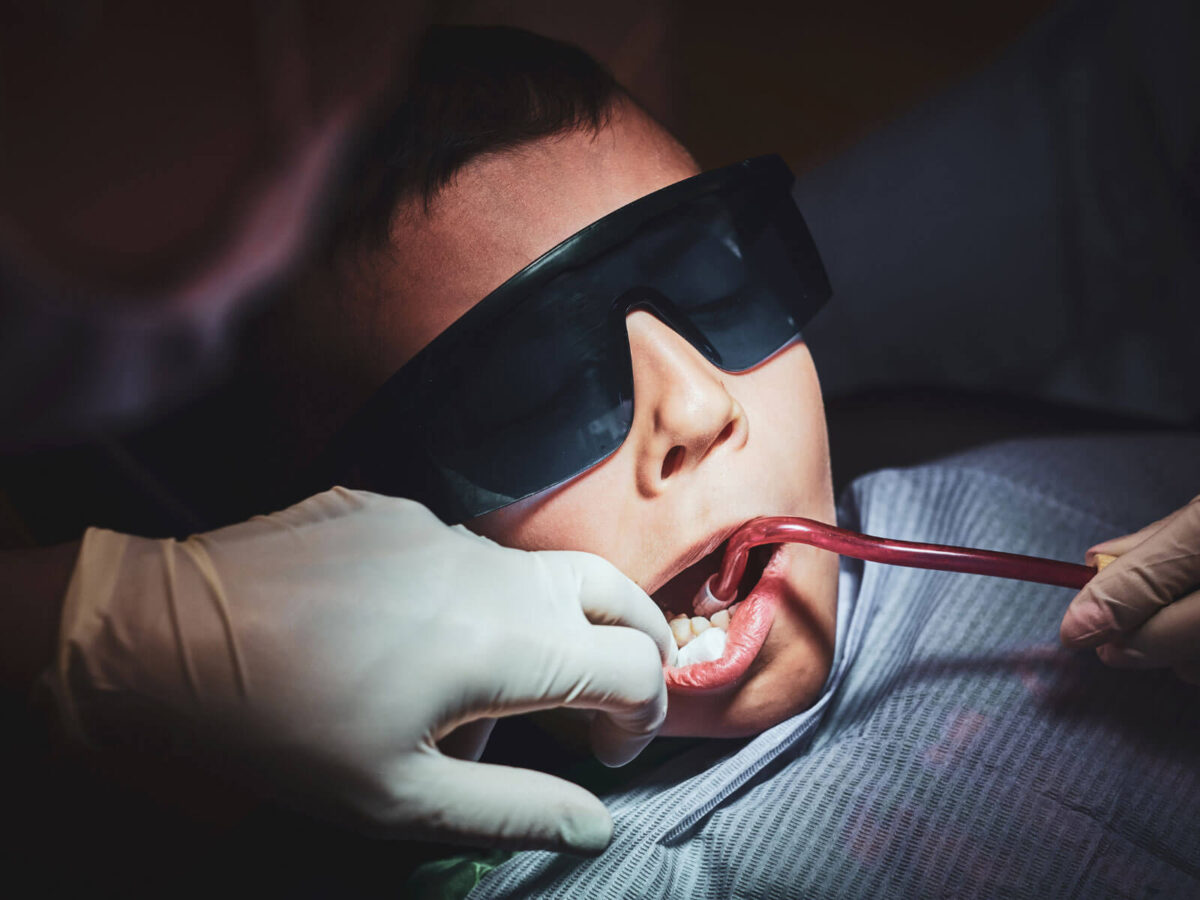
Benefits of LANAP Laser Gum Surgery: How It Compares to Traditional Gum Surgery and Who It’s Best For
A coworker of mine needed gum surgery last year. Her periodontitis had reached the point where pockets around her teeth were too deep for scaling alone to help, and her periodontist offered two paths – traditional flap surgery with a scalpel and stitches, or LANAP, a laser-based option promising less bleeding and a faster recovery.
She picked the laser, mostly on the recovery promise. A friend of hers had a similar case around the same time and went the traditional route instead. Comparing notes between the two of them is what actually got me curious about what LANAP is and whether the LANAP dental procedure benefits hold up the way it’s marketed.
What Is LANAP, Exactly
The laser used in LANAP, an Nd: YAG laser, gets fed down into the pocket between gum and tooth without anyone cutting the gum open first. It targets diseased tissue specifically, leaving healthy tissue alone, which is most of what separates it from the flap surgery periodontists have used for decades.
Flap surgery still involves an actual incision. The periodontist lifts the gum, scrapes out the plaque and tartar that built up underneath, and stitches everything back into place once it’s clean, a process Cleveland Clinic walks through here. LANAP was developed specifically to reach that same buildup without needing to open the gum up to get to it.
How the LANAP Procedure Actually Unfolds in the Chair
The periodontist starts by numbing the area with a local anesthetic. A thin laser fiber then goes into the pocket alongside the tooth root and begins working on the damaged tissue lining it.
An ultrasonic scaler cleans tartar off the root surface next, using the same tool that a standard deep cleaning relies on. The laser goes back in for a second pass after that, forming a stable blood clot at the base of the pocket.
Most appointments run two to three hours. Many practices split the LANAP dental procedure across two visits, treating half the mouth at each one rather than everything in a single sitting. A standard cleaning usually comes first, too, before any laser work begins, giving the periodontist a clear view of what’s underneath.
Does the Research Actually Support LANAP’s Benefits
A study published in PMC compared LANAP directly to scaling and root planing alone, and found a greater reduction in pocket depth with LANAP, along with a significant decrease in Porphyromonas gingivalis, one of the primary bacteria driving periodontal disease. Both treatments worked, but LANAP came out ahead on those specific measures.
Broader reviews of laser periodontal research paint a less settled picture. Individual studies often show clear benefits on specific measures, especially bacterial counts, but the long-term comparison data behind the LANAP dental procedure benefits is still much thinner than what traditional flap surgery has built up over decades.
How Does Recovery Actually Compare Between the Two
Patients report meaningfully less discomfort with LANAP, mostly because there’s no incision or sutures involved to begin with. Traditional flap patients tend to deal with soreness tied to both for a week or two afterward.
Most LANAP patients get back to normal eating and activity within a day or two. Cleveland Clinic notes a recovery window of one to four weeks for flap surgery, bone grafts, or gum grafts by comparison. Bleeding during the procedure itself tends to run lower with LANAP too, since the laser cauterizes tissue as it works, where a traditional surgical site stays open until it’s sutured shut.
My coworker’s recovery matched this pattern closely, just mild soreness for a couple of days and soft foods for under a week, nothing close to what her friend went through after traditional surgery for a similar case.
Who Is LANAP Actually Best Suited For
Moderate to severe periodontitis. LANAP generally fits patients past the point where scaling and root planing alone can control the disease, as long as enough tissue and bone structure still remain for the procedure to work. Very advanced cases with extensive bone loss sometimes still need traditional surgery regardless of laser availability.
Patients wanting to avoid a scalpel specifically. Dental anxiety around cutting instruments drives a lot of interest in the LANAP dental procedure on its own, even in cases where either method would work about equally well.
Cases needing minimal tissue disruption. LANAP skips the flap step entirely, which keeps more of the natural gum contour intact. On a front tooth that shows when you smile, that difference actually shows. On a back molar nobody sees, it barely registers.
When Does Traditional Surgery Still Make More Sense Than LANAP
Bone grafting, crown lengthening, and extensive osseous recontouring generally still call for traditional surgical access, since a laser working through an existing pocket can’t give a periodontist the same direct view and access to reshape bone that an open surgical field does.
Certification narrows the field too, more than people expect. Only periodontists trained through the specific protocol’s certification program can perform LANAP correctly, and plenty of periodontal practices simply don’t have that training. A periodontist defaulting to traditional surgery in that case is offering the option they’re actually equipped to do well, not a downgrade.
What Does LANAP Actually Cost Compared to Traditional Surgery
A single quadrant of LANAP runs $1,250 to $3,000. Most practices treat the whole mouth in one sitting, which puts the total somewhere around $5,000 – $12,000. Flap surgery costs roughly the same per quadrant, $1,000 to $3,000, though it’s usually done across a few separate appointments.
Insurance treats the two inconsistently. Some plans code LANAP dental procedure treatment the same as standard periodontal surgery, while others classify it as investigational and cover a smaller share, sometimes as little as 20 to 25 percent. Getting a direct cost estimate from a specific practice, insurance coding included, beats assuming either way going in.
What Should You Ask Before Choosing LANAP Over Traditional Surgery
Ask how many LANAP dental procedure cases the periodontist has actually performed. Certification alone only confirms training completed, not hands-on experience with the protocol.
Ask whether your specific pocket depth and bone loss pattern actually make you a good LANAP candidate, since some practices offer it as a general option regardless of severity. Confirm the cost breakdown with your insurance ahead of time too, so the investigational classification some plans use doesn’t turn into a surprise bill later.
FAQ
Is LANAP as effective as traditional gum surgery for severe periodontitis?
For many moderate to severe cases, yes, based on pocket depth reduction and bacterial outcomes in published research. Very advanced bone loss cases sometimes still need the access traditional surgery provides.
Does LANAP actually hurt less than traditional surgery?
Most patients report less discomfort, tied directly to skipping incisions and sutures. It’s not painless, just generally milder than the recovery from flap surgery.
Is LANAP something every periodontist can just decide to offer?
No. Millennium Dental Technologies runs the certification, and plenty of periodontists simply haven’t gone through it.
Does insurance treat LANAP the same as regular gum surgery?
Depends on the insurer. Some still file it under investigational, and that’s usually when coverage gets thinner. Check your specific plan before scheduling.
Conclusion
The LANAP dental procedure benefits hold up well on recovery time, bleeding, and bacterial reduction, backed directly by published research. Whether it beats traditional surgery on every measure over the long run is a separate question the broader field hasn’t fully settled yet.
Ask your periodontist whether your specific case fits what LANAP does well. That’s a different question than whether the practice happens to offer it. Gum disease severity, not scalpel aversion, is what should actually decide this.

